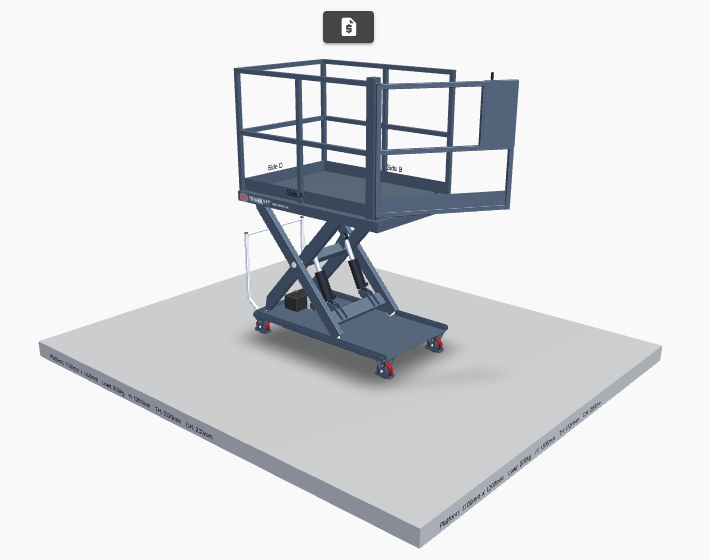
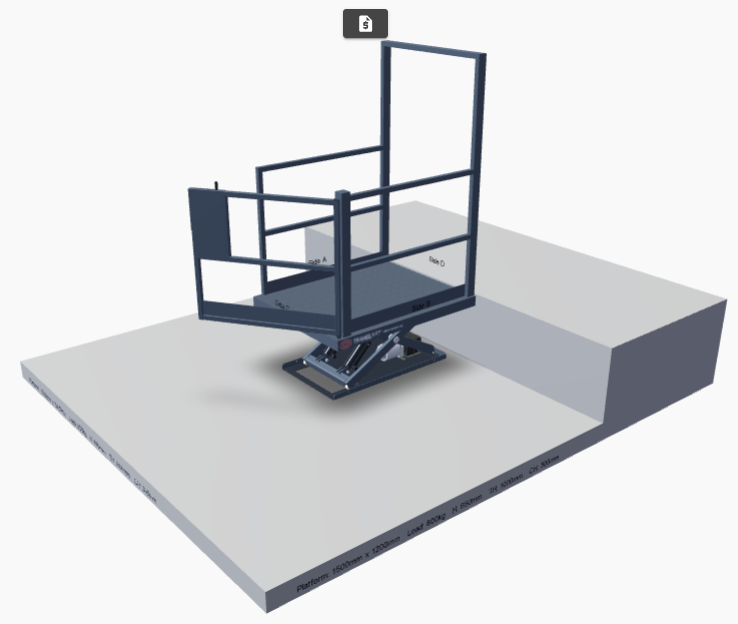
Translyft Product Configurator

The Translyft product configurator is provided as a visual and illustrative tool designed to support the initial planning and exploration of potential solutions.

Please note that the configurator is not a definitive or comprehensive representation of the final product or its suitability for your specific use case or environment.

Scroll down to see usage videos on how to configurate a goods lift, work platform and loading bay lift.

Click the black $-button at the top of the configurator to request the product or get a consultation
Design your lift - Step by step

Designing the right lift starts with understanding your working conditions, load requirements, and safety risks. Our Product Configurator video guides demonstrate how different lift types can be configured step by step to support safe and efficient material handling.

Each guide focuses on practical design decisions linked to EN 1570-1:2024, including how to assess travel zone risks, crushing hazards, fall protection, and slipping risks.


Use the videos to understand the configuration process and design a lifting solution that supports controlled operation, safe access, and reliable performance in your facility.

How to use the configurator

  1. Define platform dimensions, lifting height, load capacity, and operational features based on your application.
  2. Learn when to apply safety measures such as guarding, handrails, safety gates, bridge plates, and anti-slip surfaces to reduce operational risks.
  3. Send your finished design by clicking the $ button, fill out your contact information and click send.
Video guides: How-to guides for the Translyft Product Configurator

Loading Bay Lift Configuration

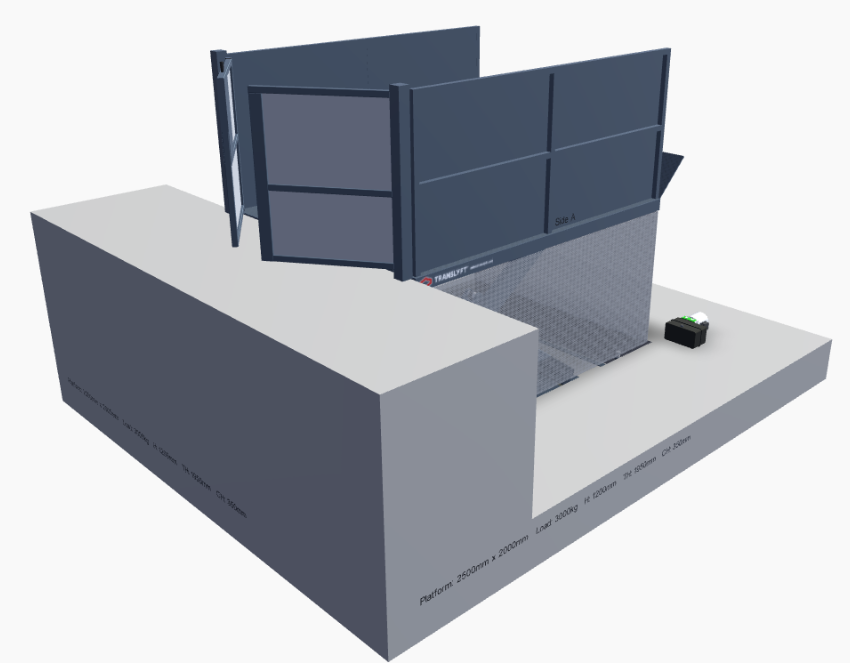
This video demonstrates how to configure a loading bay lift for safe and efficient loading and unloading of vehicles at different heights. Define the required platform size, rated load, and lifting height based on your working environment and material flow.

See how safety measures such as flexible guarding, anti-slip surfaces, sheeted handrails, bridge plates, and interlocked safety gates can be applied to reduce risks when the lift is installed in a public area. The guide shows how to configure a complete loading solution that supports controlled goods handling while aligning with key EN 1570-1:2024 safety requirements.

EN 1570-1:2024 criteria covered in the video

  • Risk of crushing and shearing
  • Risk of falling
  • Risk of slipping
  • Travel zone risks

Work platform Configuration

This video demonstrates how to configure a work platform for installation, inspection, and maintenance tasks performed at height. Define the required platform dimensions and lifting height to match the working position and operational needs.

Where flexibility between workstations is required, mobility options such as a wheel frame can be added to support repositioning within the facility. The guide also shows how fall protection, anti-slip surfaces, safety gates, and integrated protective features help ensure safe lifting operations with personnel on the platform in accordance with EN 1570-1:2024 safety requirements.

EN 1570-1:2024 criteria covered in the video

  • Risk of crushing and shearing
  • Risk of falling
  • Risk of slipping
  • Travel zone risks

Goods Lift Configuration

This video demonstrates how to configure a goods lift for reliable movement of materials between levels in a non-public working area. Select a platform size that fits your load, such as a EURO pallet with space for an operator and pallet truck, and define the required travel height and load capacity.

Learn how safety features including anti-slip platform surfaces, handrails, horizontal barriers, and controlled access points help reduce operational risks and support safe daily use. The guide shows how practical configuration choices contribute to a lifting solution that aligns with essential EN 1570-1:2024 safety requirements.

EN 1570-1:2024 criteria covered in the video

  • Risk of crushing and shearing
  • Risk of falling
  • Risk of slipping
  • Travel zone risks