Platform specifications
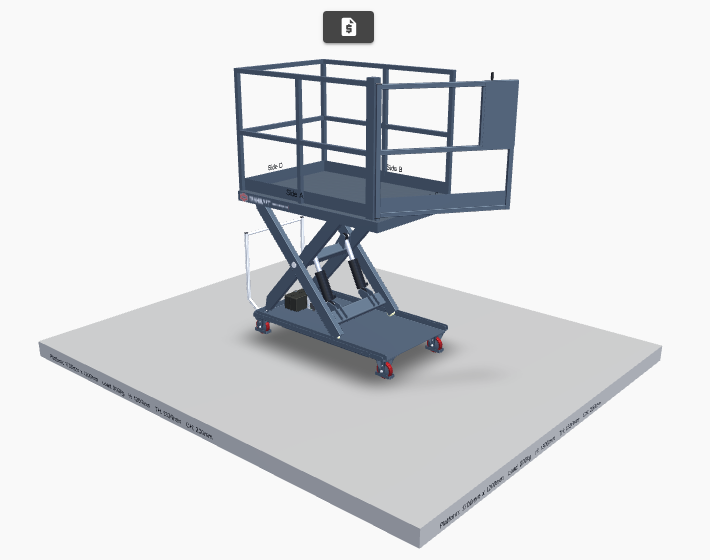
In this example, the work platform is designed with a rated load of 500 kg, a platform length of 1700 mm, a width of 1200 mm, and a lifting height of 1300 mm. These specifications create a compact and stable platform suitable for many maintenance and inspection tasks.
Anti-slip surface and fall protection
Because the lifting height exceeds 0.5 metres, and the platform is intended to carry authorized personnel, it must include measures that reduce the risk of slipping and falling. For this reason, the platform is equipped with a checker plate surface, which provides reliable anti-slip protection during operation.
To further reduce the risk of falls, handrails are installed on three sides of the platform. The remaining side is fitted with a gate equipped with a guard lock. This safety function ensures that the gate must be fully closed before the platform can move, preventing operation while the platform is open.
Mobility between work areas
To make the platform easy to move between different work locations, the lift is fitted with a wheel frame. This allows the platform to be repositioned quickly and efficiently between workstations or service areas.
Integrated safety protection
When fully raised, the platform height remains below 1600 mm. For lifts within this range, a safety edge provides sufficient protection against trapping hazards.
All Translyft lifts are equipped with a safety edge as standard. If the edge comes into contact with an obstacle during lowering, the lift automatically stops before injury or damage can occur.
Finalising your design
The work platform shown here represents the final configuration with the required safety measures applied in the Translyft Product Configurator. By selecting the correct platform specifications and adding the appropriate safety features, the lift can be designed to support safe operation while aligning with the safety requirements defined in EN 1570-1:2024.
This example demonstrates how a work platform can be configured to support maintenance, installation, or inspection tasks while protecting operators through integrated safety solutions.
Important notice
This guide provides a short introduction to designing a work platform using the Translyft product configurator. The example shows how a lift can be configured to meet common safety requirements under EN 1570-1:2024.
However, each project may have specific conditions that require additional safety measures or design considerations. To ensure that your lift fully complies with all applicable requirements and fits your exact application, we recommend contacting Translyft to discuss your project in detail.
Request your lift configuration
When your design is ready, simply click the request quotation button ($) at the top of the configurator window. Our team will review your configuration and provide a tailored offer based on your selected specifications.